


Subscribe
To join our mailing list and never miss an update!
Nature's Remarkable Dark Green Egg
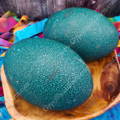
Few farm animals produce eggs as captivating as the emu. Their deep emerald-green shells, impressive size, and exceptional strength make them instantly recognizable and unlike the eggs of any other domestic bird.
Whether you've admired one at a farm, seen photographs online, or are considering purchasing fertile hatching eggs, it's easy to understand why emu eggs generate so much interest.
Beyond their striking appearance, emu eggs represent months of careful breeding, flock management, and planning. For breeders, every egg carries the potential to produce a healthy chick. For artists, the distinctive shells are prized for carving and decorative work. For new emu owners, fertile eggs often provide one of the most rewarding ways to begin raising these fascinating birds.
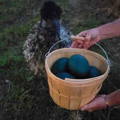
Understanding how emu eggs are produced, handled, incubated, and hatched helps explain why experienced breeders devote so much attention to every stage of the process. From the day an egg is laid until a chick emerges nearly two months later, proper management plays an important role in successful hatching.
Whether you're simply curious about these remarkable eggs or preparing to hatch your first emus, this guide will help you understand what makes them so unique.

The Unique Characteristics of Emu Eggs
- Shell Color
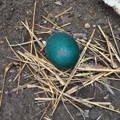
The first thing most people notice about an emu egg is its rich, dark green shell. While often described as emerald or forest green, the exact shade varies from hen to hen and may even change slightly throughout the breeding season.
Interestingly, the shell itself is naturally blue beneath the surface. The familiar green appearance comes from pigments deposited during the egg-development process. When artists carefully carve or polish away the outer layer, the underlying blue shell is revealed, allowing intricate multi-colored designs to emerge. This unique characteristic has made emptied emu eggs popular for decorative carving and artwork.
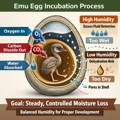
The shell also serves an important biological purpose. Although exceptionally thick and durable, it still allows the exchange of oxygen and moisture necessary for proper embryo development throughout incubation.
- Size & Weight
Holding an emu egg for the first time is often surprising. Its huge size, texture, substantial weight, and remarkable shell strength immediately distinguish it from the eggs of chickens, ducks, or geese.
Emu eggs are among the largest laid by any living bird. Most weigh 500-700 grams and contain roughly the same volume as 10 to 12 large chicken eggs, although individual size varies depending on the hen, her age, and the point within the breeding season.
Despite their size, the eggs are relatively compact. Their oval shape distributes pressure efficiently, making the shell extraordinarily strong for its thickness. This durability helps protect the developing chick during the lengthy incubation period.
Producing an egg of this size requires considerable nutritional resources. Healthy breeding hens depend on proper nutrition, good body condition, and low-stress environments to consistently produce one egg, roughly every 72 hours, throughout the season.
Breeding Season and Egg Production
Unlike chickens, which can lay throughout much of the year, emus are seasonal breeders. In most areas of the United States, egg production begins during late fall and continues through the winter months, although timing varies with climate, weather, daylight length, and individual birds.
- Breeding Season Preparation
As breeding season approaches, established pairs begin displaying noticeable behavioral changes. Courtship becomes more frequent, vocalizations increase, and bonded pairs spend more time together before egg laying begins.
Unlike poultry breeders, emu breeders allow these natural seasonal cycles to occur without attempting to manipulate them through artificial lighting or intensive production methods. Working with the birds' natural rhythms often promotes healthier breeding stock and more consistent long-term reproductive performance.
Because fertile eggs are only available during breeding season, demand frequently exceeds supply. Many experienced breeders, such as Gypsy Shoals Farm, accept order months before the first eggs are laid, making advance planning important for prospective buyers.
- Egg Production
One of the most common questions prospective owners ask is how many eggs an emu will lay each year. The reality is that there is no universal answer. However, 30-60 eggs is a fair range to expect per female, each season.
Egg production varies significantly based on the hen's age, genetics, health, nutrition, weather conditions, breeding experience, and overall management. Younger hens often produce fewer eggs than mature, proven breeders, while established hens typically become more consistent over successive seasons.
Environmental factors can also influence production. Periods of extreme weather, illness, stress, or significant management changes may affect laying patterns, and individual hens naturally differ in both productivity and timing.
Collecting and Storing Emu Eggs
Proper handling begins the moment an egg is laid.
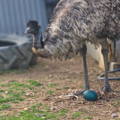
During breeding season, experienced breeders inspect breeding pens regularly and collect eggs promptly. You will find that each of your pairs lay their eggs at a fairly routine time of the day and usually in the same general location. Ours happen to be right after the sun sets and so we know when to collect them. Timely collection helps reduce exposure to weather, contamination, accidental damage, and unnecessary handling by the breeding birds.
Although emu shells are exceptionally strong, they should still be handled carefully. Rough treatment can damage the protective outer coating or create small cracks that are difficult to detect but may reduce hatch success.
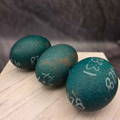
Many breeders also record important information for every egg, including the laying date, breeding pair, weight in grams, and production notes.
Maintaining accurate records allows breeders to evaluate fertility, hatchability, and overall flock performance over time while making informed breeding decisions in future seasons.
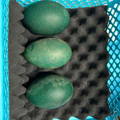
Not every egg enters an incubator immediately after collection. Eggs are often stored for a short period while additional eggs are collected before beginning a hatch.
Proper storage helps preserve embryo viability before incubation begins. Eggs should be kept in a clean environment where they are protected from excessive temperature fluctuations, direct sunlight, and physical damage.
Manually rotate the emu eggs 2-3 times daily during this stage to mimic what happens in the nest naturally.
One advantage of purchasing fertile eggs from an experienced breeder is knowing these important early management steps have already been handled with care.

EMU EGG INCUBATION
Successful incubation is the result of careful preparation and consistency. Whether eggs are incubated naturally by the male or artificially in an incubator, maintaining stable conditions throughout development is essential for healthy chicks.
- nATURAL INCUBATION
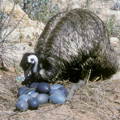
One of the most fascinating aspects of emu reproduction is the male's role in raising the next generation. After the hen finishes laying her clutch, the male typically takes over incubation, settling onto the nest for approximately 50 to 56 days.
During this time, he rarely leaves except when absolutely necessary, relying largely on body reserves accumulated before incubation began. While the female may remain nearby, the male assumes primary responsibility for protecting the eggs and maintaining suitable conditions for development.
This remarkable level of parental care is one of the defining characteristics of emus and often surprises people who are unfamiliar with ratites.
- aRTIFICIAL INCUBATION
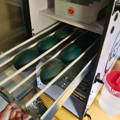
Many breeders choose artificial incubation, particularly when selling emu chicks or managing multiple breeding pairs. Artificial incubation provides greater control over environmental conditions while protecting valuable eggs from predators, severe weather, and accidental damage.
Successful emu egg incubation depends on maintaining consistent temperature, humidity, ventilation, and regular egg turning throughout the incubation period. Because incubator models and environmental conditions vary, breeders often refine their management techniques over multiple breeding seasons.
New owners should always follow the manufacturer's recommendations for their specific incubator while gaining experience through careful observation.
Trending Articles



HATCHING EMU EGGS
After nearly two months of incubation, hatch day is the exciting reward for weeks of careful management.
The hatching process begins when the chick breaks through the internal membranes before creating its first opening in the shell, a stage commonly known as "pipping." From there, the chick gradually works its way around the shell before finally emerging.
Although it can be tempting to assist, healthy chicks generally benefit from completing the process on their own. This final effort allows them to absorb the remaining yolk, strengthen their muscles, and prepare for life outside the egg.
Once free of the shell, chicks usually rest while they dry before becoming increasingly active. Watching a healthy emu chick emerge is an unforgettable experience and one of the most rewarding moments for any breeder.
EARLY CHICK CARE
Emu chicks are precocial, meaning they can walk and begin eating shortly after hatching. Even so, they require a properly prepared brooding environment with appropriate warmth, secure footing, fresh water, and a balanced starter ration formulated for healthy growth.
The first few days are an ideal time to closely observe each chick to ensure it is eating, drinking, and moving normally. Providing proper nutrition, adequate space, and a clean environment during these early weeks helps establish the foundation for healthy skeletal development and long-term growth.
If you're preparing for your first hatch, be sure to read our companion guide, Raising Strong Emu Chicks: The First 90 Days, which explores brooding, nutrition, and early management in greater detail.

Purchasing Fertile Emu Eggs
Frequently Asked Questions ABOUT EMU EGGS
- Do all fertile emu eggs hatch?
- Does a larger egg produce a larger chick?
- How long does it take an emu egg to hatch?
THE TAKEAWAY
Trending Products
Copyright©2026 All rights reserved. We love to have you share our article as long as you include a direct link to this page. This article or any portion thereof , including all images, may not be reproduced or used in any manner whatsoever without the express written permission of Gypsy Shoals Farm.