

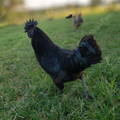
The Differences Between Ayam Cemani & Svarthona Chicken Breeds
Learn the key differences between Ayam Cemani and Svarthona, including origin, genetics, appearance, and temperament in this detailed breed comparison.
These two breeds of poultry are easy to confuse until you know these key differences in their body type and carriage.
Subscribe
To join our mailing list and never miss an update!
To the untrained eye, the Ayam Cemani and the Svarthona appear nearly identical. Both are striking black chickens with dark feathers, skin, and eyes. Their all-black appearance sets them apart from most poultry breeds and has earned the ayam cemani a place in the world of rare and exotic chickens. However, beneath the surface, the two breeds differ significantly in origin, genetic expression, physical characteristics, and practical use.
Although they share a genetic condition known as fibromelanosis, which causes hyperpigmentation, the Ayam Cemani and Svarthona are not the same breed. Each has been shaped by different environments, breeding goals, and cultural influences. This article explores those differences in detail.
Origins and History
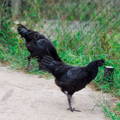
The Ayam Cemani originates from Indonesia, specifically the island of Java. It has long been a part of Javanese folklore and spiritual tradition. In local culture, Ayam Cemani chickens are believed to possess mystical powers and are sometimes used in ceremonial rituals, particularly for their dark physique (inside and out) which is thought to hold spiritual energy.
The name "Ayam" means "chicken" in Indonesian, while "Cemani" is believed to derive from a Javanese word meaning "completely black", referring to the bird’s striking full-body pigmentation. The breed is believed to have originated in Central Java, particularly in regions such as Kedu.
In contrast, the Svarthona developed much farther north, in Scandinavia. This breed is the product of fibro melanistic chickens, possibly including Ayam Cemani, that were brought to Norway and Sweden by sailors or traders. These birds were then selectively bred to survive and thrive in cold northern climates. Over time, they became a distinct breed, now known in English as the Swedish Black Hen. Unlike the Ayam Cemani, the Svarthona was not bred for religious or cultural significance but rather for practical farm use.
Genetic Differences
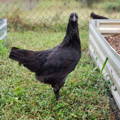
Both breeds owe their black coloration to a dominant mutation linked to fibromelanosis, caused by a duplication near the endothelin-3 (EDN3) gene. This gene controls the overproduction and migration of melanocytes, the pigment cells responsible for melanin. As a result, affected birds show black pigment not only in their feathers and skin but often throughout their entire bodies.
However, the intensity and consistency of fibromelanosis differ between the two breeds. The Ayam Cemani typically expresses the gene in its homozygous form (FM/FM), which results in uniform and intense pigmentation. This includes black feathers, skin, dark eyes, beak, tongue, internal organs, muscles, and even bones. In Indonesia, and among specialty breeders worldwide, birds are selectively bred to maintain and enhance this extreme pigmentation.
The Svarthona also carries the fibromelanosis gene, but its expression is usually less extreme. Many individuals have heterozygous expression (FM/+), and as a result, pigmentation can be inconsistent. While most Svarthona have black or dark gray skin, feathers, and combs, their tongues may appear gray or pink, and their internal organs may show little to no pigmentation. Breeders in Scandinavia have historically prioritized hardiness and egg production over perfect pigmentation, which contributes to the genetic variability seen in this breed.

Physical Characteristics
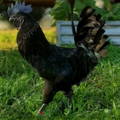
Externally, both the Ayam Cemani and the Svarthona appear strikingly black, with a glossy iridescent sheen that can reflect green or purple in sunlight. Their skin, wattles, combs, and legs are all dark in color, typically black or dark slate. However, Ayam Cemani chickens tend to be more uniform in pigmentation across every visible trait, including black tongues and fully pigmented feet and nails. Svarthona may show lighter-colored claws or less saturated areas on the beak or tongue.
Internally, the difference becomes more pronounced. The Ayam Cemani is famous for its deep internal melanization. The meat is dark gray to black, and the organs, such as the heart, lungs, liver, and reproductive tract, are also heavily pigmented. Even the bones are black or bluish gray. This trait is highly sought after and is one of the breed’s defining features.
The Svarthona, on the other hand, usually exhibits partial internal pigmentation. While some birds may have dark meat or organs, others are internally similar to conventional chickens. This inconsistency reflects the breed’s utility-focused history and the more relaxed approach to maintaining extreme pigmentation.
Trending Articles



Body Structure and Size
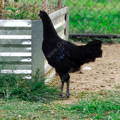
Ayam Cemani chickens are generally more slender and elegant in appearance. Roosters typically weigh between 4.5 and 6.5 pounds, while hens weigh around 3.5 to 4.5 pounds. They have an upright posture and a long-legged silhouette, which contributes to their ornamental appeal.
The Svarthona is slightly larger and has a heavier, more rounded build. Roosters weigh between 5.5 and 6.5 pounds, and hens typically fall in the range of 4.5 to 5.5 pounds. Their body type resembles that of a dual-purpose farm breed, with a broader chest and a more compact, robust structure. This physical robustness makes them well suited to life in colder climates.
Temperament and Use
Temperament also sets the two breeds apart. Ayam Cemani chickens are known for being alert, active, and sometimes flighty. They are not naturally docile and can be wary of humans if not handled frequently. Given their rarity and cost, they are primarily kept for ornamental purposes, breeding programs, or ceremonial use rather than for eggs or meat.
Svarthona, by contrast, is generally calm, friendly, and well suited for small farms or backyard flocks. Their gentle temperament and adaptability make them ideal for beginners and families. They are also far better egg layers than the Ayam Cemani. While the Cemani lays a modest 60 to 120 cream-colored eggs per year, the Svarthona can lay between 150 and 200 eggs annually, making them a more practical choice for those interested in egg production.
Availability and Cost
Ayam Cemani chickens are among the rarest and most expensive chicken breeds in the world. In the United States and Europe, purebred Ayam Cemani chickens that display full internal pigmentation can command very high prices. Limited availability and intense demand have kept them in the realm of specialty breeders and collectors.
Svarthona, while still considered a heritage breed more so than a rare breed, is more accessible in parts of Europe and North America. It is generally more affordable than the Ayam Cemani and easier to find through heritage poultry breeders or sustainable agriculture programs.
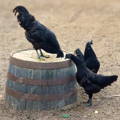
Although the Ayam Cemani and Svarthona share a visually similar appearance and a common genetic trait, they are distinctly different breeds with unique qualities. The Ayam Cemani is a ceremonial bird, bred for its mystical beauty and dramatic pigmentation. It is exotic, rare, and largely ornamental. The Svarthona, by contrast, is a practical and hardy bird developed for utility in cold climates. While it shares some visual traits with the Ayam Cemani, it differs in structure and carriage as well as the intensity of fibro displayed.
For anyone interested in buying the all black and rare Ayam Cemani, knowing these differences is critical. You want to know that you are not being sold something that isn’t a double gene displaying pure bred Ayam Cemani.
Trending Products
Copyright©2024 All rights reserved. We love to have you share our article as long as you include a direct link to this page. This article or any portion thereof , including all images, may not be reproduced or used in any manner whatsoever without the express written permission of Gypsy Shoals Farm.