

Subscribe
To join our mailing list and never miss an update!
WHY DOES HONEY CRYSTALLIZE?
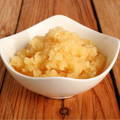
Few things cause more confusion among honey buyers than opening a jar of honey and discovering that it has become thick, grainy, or completely solid. Many people assume crystallized honey has spoiled or gone bad. In reality, the opposite is often true.
Crystallization is a completely natural process that occurs in most pure honey. In fact, many beekeepers view crystallization as a sign that honey has remained close to its natural state and has not been excessively processed.
Understanding why honey crystallizes can help consumers appreciate one of honey's most fascinating natural characteristics and avoid throwing away perfectly good honey.
HONEY IS NATURALLY SUPER-SATURATED
To understand crystallization, it helps to know a little about the composition of honey.
Honey is primarily made up of natural sugars and water. The two most abundant sugars are fructose and glucose. While the exact ratio varies depending on the flowers visited by the bees, honey generally contains more sugar than can remain permanently dissolved in its water content.
Scientists refer to this as a "supersaturated solution."
Because honey contains more dissolved sugar than the water can permanently hold, it naturally seeks balance over time. As a result, some of the glucose begins to separate from the liquid portion of the honey and form tiny crystals.
This process is completely normal and occurs naturally in many types of honey.

Trending Articles



Why Some Honey Crystallizes Faster Than Others
Not all honey crystallizes at the same rate. Some varieties may remain liquid for many months or even years, while others begin crystallizing within a few weeks after harvest. The primary factor is the ratio of glucose to fructose.
Honey varieties with higher glucose content tend to crystallize more quickly. Honey with higher fructose levels often remains liquid longer. This is why different floral sources produce different crystallization patterns.
For example:
• Clover honey often crystallizes relatively quickly.
• Alfalfa honey may crystallize at a moderate rate.
• Tupelo honey is famous for remaining liquid for extended periods.
• Wildflower honey can vary significantly depending on the dominant nectar sources.
The speed of crystallization is influenced by nature, not necessarily by quality.
Temperature Plays a Major Role
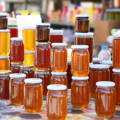
Storage temperature has a significant impact on crystallization. Honey crystallizes most rapidly when stored between approximately 50°F and 60°F. Temperatures below this range slow molecular movement, while warmer temperatures can delay crystal formation.
This is why a jar stored in a cool pantry may crystallize sooner than one stored in a warm kitchen cabinet. However, even honey stored under ideal conditions will often crystallize eventually because the process is natural and ongoing.
The Importance of Pollen and Natural Particles
Raw and minimally processed honey contains tiny particles of pollen, beeswax, propolis, and other natural substances from the hive. These particles serve as what scientists call "nucleation sites." In simple terms, they provide a starting point around which glucose crystals can form.
Because raw honey contains these natural particles, it often crystallizes faster than heavily filtered commercial honey.
This is one reason many beekeepers view crystallization as a positive sign. It suggests more of the honey's natural characteristics and benefits have been retained rather than being heavily filtered.
Why Commercial Honey Often Stays Liquid Longer
Many consumers compare their local honey to supermarket honey and wonder why one crystallizes while the other remains liquid. The answer often lies in processing.
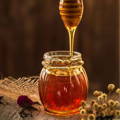
Large-scale commercial honey is frequently heated and filtered before packaging. Heating temporarily dissolves crystals and delays future crystallization. Fine filtration removes pollen and microscopic particles that encourage crystal formation.
These commercial processing steps create a clear, attractive product with a longer shelf appearance, but they also remove most of the natural characteristics that many honey enthusiasts value.
The fact that commercial honey remains liquid for extended periods does not make it better. It means it has simply undergone more processing.
Does Crystallized Honey Mean It Has Gone Bad?
Absolutely not. Crystallization is a physical change, not spoilage. When honey crystallizes, its sugar molecules are simply reorganizing into a more stable structure. The flavor, nutritional content, and safety remain essentially unchanged.
Honey is one of the most shelf-stable foods in the world. Archaeologists have even discovered ancient honey that remained edible after thousands of years. As long as honey has been stored properly and has not been contaminated with excess moisture, crystallized honey is perfectly safe to eat.
Many People Actually Prefer Crystallized Honey
While some consumers worry when honey becomes solid, others actively seek out crystallized honey. The crystal structure creates a smooth, spreadable texture that works exceptionally well on:
• Toast
• Biscuits
• English muffins
• Bagels
• Pancakes
• Waffles
Some honey producers intentionally create whipped or creamed honey by carefully controlling crystallization. This produces a smooth texture that is easy to spread and highly popular with honey lovers.
For many people, crystallized honey is not a problem to solve—it is a desirable feature.
How to Return Honey to Liquid Form
If you prefer liquid honey, it's easy to reverse the crystallization process and return it to a pourable state. The key is to use gentle heat.
Place the honey jar in a container of warm water and allow it to sit until the crystals dissolve. Stir occasionally to distribute heat evenly. Avoid using boiling water or excessive heat.
High temperatures can damage beneficial compounds and enzymes that contribute to honey's natural character.
Patience is important. Gentle warming preserves quality while restoring a smooth consistency.

How to Slow Down Crystallization
Although crystallization cannot be permanently prevented, you can slow it down with a few tips on how to store honey:
• In a tightly sealed container
• At room temperature
• Away from direct sunlight
• Away from excessive moisture
• Avoid refrigeration, as cooler temperatures often accelerate crystallization.
Even with ideal storage, however, many pure honeys will eventually crystallize. That is simply part of their natural life cycle.
The Connection Between Crystallization and Honey Quality
One of the biggest myths in the honey industry is that liquid honey is superior to crystallized honey.
In reality, crystallization often indicates the opposite.
Many high-quality raw and minimally processed honeys crystallize because they still contain pollen, natural compounds, and their original sugar balance. These characteristics are often associated with small-batch honey produced by local beekeepers.
While crystallization alone cannot guarantee purity, it is frequently a sign that honey has remained close to its natural state.
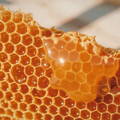
Crystallization is one of the most misunderstood aspects of honey. Rather than signaling spoilage, it is a natural process that occurs because of honey's unique composition.
The next time you find a jar of crystallized honey in your pantry, consider it a reminder that honey is a living agricultural product shaped by flowers, bees, weather, and time.
In many cases, crystallization is a sign that your honey has been minimally processed and retains the natural characteristics that make honey such a remarkable food. Instead of viewing crystals as a flaw, they can be appreciated as evidence of authentic, high-quality honey—just as nature intended.
Trending Products
Copyright©2026 All rights reserved. We love to have you share our article as long as you include a direct link to this page. This article or any portion thereof , including all images, may not be reproduced or used in any manner whatsoever without the express written permission of Gypsy Shoals Farm.