Subscribe
To join our mailing list and never miss an update!
Raw honey has earned a reputation as a premium, more natural alternative to the uniform bottles lining grocery store shelves. Yet despite its growing popularity, many consumers still have only a vague understanding of what “raw” actually means. Is it simply unfiltered? Is it healthier? Does it taste different? And perhaps most importantly, what really happens between the hive and the bottle?
To understand raw honey properly, it helps to follow its journey from the beginning. Honey is not manufactured; it is produced through a remarkable biological and agricultural process shaped by climate, forage availability, colony health, and careful stewardship. Each stage—from nectar collection to extraction and bottling—affects the final product.
What Raw Honey Really Means
Raw honey is honey that has not been pasteurized or ultra-filtered after extraction. It is typically strained to remove visible debris such as wax fragments, but it is not subjected to high heat or aggressive processing intended to standardize appearance and delay crystallization. As a result, raw honey retains its natural enzymes, trace pollen, and structural characteristics.
Unlike commercial honey, which is often heated to improve clarity and shelf uniformity, raw honey reflects the conditions under which it was produced. Its color may vary from pale gold to deep amber depending on the floral sources available during the season. Its texture may change over time as it naturally crystallizes. These variations are not flaws; they are evidence of minimal intervention.
Understanding raw honey begins with the bees themselves.
Trending Articles


Nectar Collection and the Role of the Foraging Bee
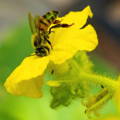
The process starts in the field when worker bees gather nectar from blooming plants. Nectar is a sugar-rich liquid produced by flowers to attract pollinators. As bees move from bloom to bloom, they not only collect nectar but also pollinate crops and wild plants, supporting both agriculture and local ecosystems.
Once nectar is collected, it is stored in the bee’s honey stomach, a specialized organ separate from its digestive system. During transport back to the hive, enzymes begin breaking down complex sugars into simpler forms. This enzymatic activity is an essential part of honey production and begins before the nectar ever reaches the comb.
The floral source of the nectar strongly influences the final honey. Spring wildflowers may produce lighter, more delicate honey, while later-season blooms often yield darker, richer flavors. Rainfall, temperature, and soil conditions all play a role. Raw honey, therefore, carries the imprint of its environment.
Inside the Hive: Transformation and Preservation
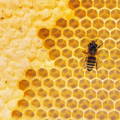
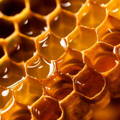
Back at the hive, nectar is passed between worker bees in a vital process that further reduces its moisture content. The bees deposit the nectar into wax comb cells and begin fanning their wings to circulate air. This airflow gradually evaporates excess water, transforming the thin nectar into the thick, stable substance we recognize as honey.
Fresh nectar may contain upwards of 70 percent water. Mature honey typically contains around 17 to 18 percent. This reduction is critical because it prevents fermentation and allows honey to remain shelf-stable without refrigeration or preservatives.
When the moisture content reaches the appropriate level, bees seal the honeycomb cells with a thin wax cap. This capping signals that the honey is fully ripened and ready for storage. For beekeepers, capped frames indicate that the honey can be harvested without risking spoilage.
Responsible Harvesting Practices
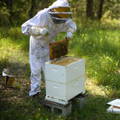
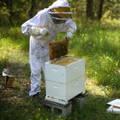
Harvesting honey requires careful timing and restraint. Ethical beekeepers remove only surplus honey, leaving enough stores for the colony to sustain itself. The health of the hive always takes priority over yield.
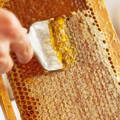
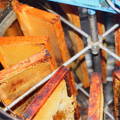
During harvest, frames are removed from the hive and bees are gently cleared away. The wax caps sealing the honeycomb are carefully removed, and the frames are placed in an extractor. This device uses centrifugal force to spin honey out of the comb without destroying it. Preserving the comb allows it to be returned to the hive for reuse, reducing the bees’ workload.
Properly ripened honey flows easily from the comb. If harvested too early, its moisture content may be too high, increasing the risk of fermentation. Monitoring timing and moisture levels is therefore essential to quality.
Extraction, Straining, and Minimal Processing
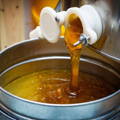
Once extracted, honey contains small particles of wax and other natural materials. In raw honey production, the liquid is passed through a coarse strainer to remove larger debris while preserving its natural composition. This is a gentle clarification process, not an industrial filtration system.
At this stage, the difference between raw and commercial honey becomes more pronounced. Large-scale operations often heat honey to high temperatures to make it easier to filter and to slow crystallization. While heating improves clarity and extends the time honey remains liquid, it can also alter certain natural characteristics.
Raw honey, by contrast, is not pasteurized. It may appear slightly cloudy, and over time it will often crystallize. These qualities reflect minimal interference rather than lower quality.
Settling and Bottling honey
After straining, raw honey is typically allowed to settle in food-grade containers. During this resting period, air bubbles rise to the surface and fine particles naturally separate. This gentle settling clarifies the honey without applying heat.
Once ready, the honey is poured into jars and sealed. No additives are necessary. Honey’s natural acidity and low moisture content make it inherently stable when properly handled. When stored at room temperature in a sealed container, it can remain usable for an exceptionally long time.
Why Raw Honey Crystallizes
Crystallization is one of the most misunderstood aspects of raw honey. Many consumers assume that solidified honey has spoiled, but crystallization is a completely natural process influenced by the balance of glucose and fructose in the honey.
Glucose tends to crystallize more readily than fructose. Honey varieties with higher glucose content will crystallize faster, particularly when stored in cooler temperatures. Commercial honey is often heated specifically to delay this process, but raw honey will eventually return to a semi-solid state.
This transformation does not indicate spoilage. In fact, crystallization often signals that the honey has not been overly processed. Decrytallizing honey is a fast and easy process. Gently warming the jar in a bath of warm (not boiling) water will return it to a pourable consistency.
Raw Honey Versus Commercial Honey
The differences between raw and commercial honey extend beyond appearance. Commercial honey is frequently blended from multiple regions to achieve uniform color and flavor. It may be ultra-filtered to remove pollen and pasteurized to maintain clarity during long distribution cycles.
Raw honey, especially when produced in small batches, reflects a specific season and location. Its flavor profile may change from year to year depending on rainfall, bloom cycles, and environmental conditions. Rather than offering uniformity, it offers authenticity.
For consumers who value transparency and traceability, this distinction matters. Knowing how and where honey was produced builds confidence in its quality.
Storage and Longevity
Honey’s longevity and unlimited shelf-life is well documented. In fact, honey has even been found in Egyptian tombs. When protected from moisture and stored in a sealed container at room temperature, it remains stable for a lifetime.
Refrigeration is unnecessary and may accelerate crystallization. Introducing water into the jar, however, can lead to fermentation. The key to preserving raw honey is simple: keep it sealed, dry, and at moderate room temperature.
The Agricultural Significance of Raw Honey
Beyond its culinary uses, raw honey represents a broader agricultural relationship. Beekeeping supports pollination, which in turn sustains fruit trees, vegetables, and wild plant populations. Each jar of honey reflects not only the work of bees but also the ecological health of the surrounding landscape.
Seasonal variation in raw honey serves as a reminder that agriculture is dynamic. Weather patterns shift. Bloom cycles change. The land influences the product. Unlike standardized sweeteners, raw honey carries that story forward.
From Hive to Bottle: Why It Matters
Understanding the full journey of raw honey—from nectar collection and enzymatic transformation to careful harvesting and minimal processing—clarifies why handling practices are so important. Every decision, from harvest timing to straining method, shapes the final result.
Raw honey is not defined by marketing language alone. It is defined by restraint: restraint in heating, restraint in filtering, and restraint in altering what the bees have already perfected.
For those seeking a sweetener that reflects its origin and preserves its natural qualities, raw honey offers a direct connection to the hive and the land surrounding it. When produced responsibly and handled with care, it remains one of the most remarkable and enduring foods in agriculture.
From hive to bottle, its story is one of biology, stewardship, and respect for a process that has existed long before modern processing ever began. For a deeper dive into gourmet honey, we recommend reading about the USDA Honey Grading System.
At Gypsy Shoals Farm, integrating seasonally blooming plants not only strengthens local bee populations but also supports healthier crops, richer ecosystems, and long-term environmental stewardship. By planting with intention and timing, we can help ensure that bees have the nourishment they need to thrive throughout the year.
Trending Products
Copyright©2026 All rights reserved. We love to have you share our article as long as you include a direct link to this page. This article or any portion thereof , including all images, may not be reproduced or used in any manner whatsoever without the express written permission of Gypsy Shoals Farm.