

Subscribe
To join our mailing list and never miss an update!
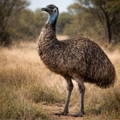
Among the world’s flightless birds, the emu (Dromaius novaehollandiae) stands out not only for its size and speed, but also for one of the most unusual vocalizations in the avian world. Observers are often surprised to learn that it is female emus, not males, that produce the species’ distinctive low-frequency “booming” or “drumming” sound. This deep, resonant vocalization—often described as a distant drumbeat or hollow rumble—can travel over remarkable distances and plays a critical role in emu reproductive behavior.
Understanding why female emus boom, and how they are biologically equipped to do so, offers a fascinating window into avian communication, sexual role reversal, and specialized anatomical adaptation. This article explores the behavioral purpose, anatomical structures, and physiological mechanisms behind the female emu’s booming call, with attention to accurate terminology and current biological understanding.
VOCAL ROLE REVERSAL IN EMUS
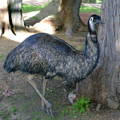
In most bird species, males are the primary vocalizers, using songs or calls to attract females, defend territories, or assert dominance. Emus are a notable exception. They exhibit a form of sex role reversal during the breeding season, in which females are the more aggressive, mobile, and vocal sex, while males assume the primary role in incubation and chick-rearing.
It is the female emu that initiates courtship and actively seek mates. Vocalization is central to this strategy. The booming sound serves as a long-range communication signal that allows females to advertise reproductive readiness, establish dominance, and locate males across expansive, open habitats.

Trending Articles



bEHAVIORAL PURPOSE OF THE BOOMING CALL
The female emu’s booming vocalization serves several distinct but interconnected functions, particularly during the breeding season.
• Mate Attraction
The primary function of the booming call is mate attraction. Emus inhabit large, open landscapes, including grasslands, savannas, and semi-arid regions of Australia. In such environments, visual signals alone are insufficient for long-distance communication. Low-frequency sounds, however, propagate efficiently over long distances with minimal attenuation.
The booming call allows a female emu to signal her presence and reproductive condition to males that may be located more than a mile away. The depth and intensity of the call provide reliable cues that males can detect and localize.
• Territorial and Social Signaling
Booming also functions as a territorial and dominance signal, particularly toward other females. During breeding season, competition among females can be intense. A strong, frequent booming display may discourage rival females from entering the area, reducing competition for available males.

• Hormonal and Reproductive Signaling
The production of booming calls is closely linked to hormonal changes, particularly elevated estrogen levels associated with reproductive readiness. As hormone levels rise, females become more vocal, more aggressive, and more mobile. Outside of the breeding season, booming behavior decreases significantly or disappears altogether.
tHE aNATOMY OF THE eMU'S bOOMING cALL
The distinctive drumming vocalization produced by female emus is the result of a highly specialized sound-production system that differs fundamentally from that of mammals and even most other birds. Rather than relying on vocal cords, emus generate sound through a combination of unique avian anatomy, specialized respiratory adaptations, and their large body size—working together to create one of the lowest-frequency vocalizations in the bird world.
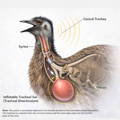
At the core of this system is the syrinx, the avian vocal organ located at the junction where the trachea divides into the bronchi leading to the lungs. In emus, the syrinx is adapted not for complex melodies or high-pitched calls, but for the production of low-frequency vibrations. Sound originates as air passes through vibrating membranes within the syrinx during exhalation. However, the syrinx alone cannot account for the exceptional depth, volume, or resonance of the female emu’s boom.
The most critical anatomical adaptation responsible for these qualities is the inflatable tracheal sac, sometimes described as a cervical air sac expansion. This structure is especially well developed in females and becomes visibly apparent as a swelling at the base of the neck when the bird vocalizes. The tracheal sac is an elastic, thin-walled extension of the trachea that lies just beneath the skin. During vocalization, it inflates with air drawn from the respiratory system.
Once inflated, this sac functions as a powerful resonance chamber, amplifying and modifying the sound initiated by the syrinx. Much like the body of a drum or the hollow cavity of a musical instrument, the tracheal sac lowers the fundamental frequency of the sound, increases its volume without requiring excessive muscular effort, and imparts the characteristic hollow, pulsing quality of the emu’s boom. Because much of the sound energy is concentrated in very low-frequency ranges—some near or below the lower limits of typical human hearing—the call is often felt as a vibration as much as it is heard.
The emu’s large body size further enhances this effect. Adult emus can reach heights of up to six feet and weigh over 100 pounds, and their long trachea provides an extended air column that naturally favors low-frequency sound production. When combined with the inflatable tracheal sac, this elongated respiratory pathway allows female emus to generate exceptionally deep and far-carrying vocalizations, setting them apart from nearly all other bird species.
Together, the syrinx, the inflatable tracheal sac, and the emu’s large body architecture form an integrated acoustic system—one specifically adapted for producing the powerful, low-frequency booming calls that play a critical role in communication and breeding behavior.
Acoustic Properties of the Booming Sound
The female emu’s call is unusual not only in its purpose but also in its acoustic structure.
The sound is characterized by:
• Very low fundamental frequencies
• Rhythmic pulsing rather than sustained tones
• Strong resonance with minimal harmonic complexity
These properties allow the sound to travel efficiently across open landscapes and remain detectable even in windy or noisy conditions. The call’s low frequency also makes it difficult to pinpoint precisely, which may reduce the risk of attracting predators while still enabling communication with conspecifics.
COMPARISON TO OTHER RATITES
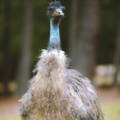
Emus belong to a group of large, flightless birds known as ratites, which includes ostriches, rheas, kiwis, and cassowaries. While some of these species produce low-frequency sounds, the female emu’s booming call is particularly distinctive.
Ostriches do not produce sound this way, and they do not have an inflatable tracheal sac like female emus. While ostriches produce sounds such as booms, roars, hisses, and grunts, but these are generated through airflow and tissue vibration in the syrinx combined with esophageal and throat inflation, not a true resonating tracheal sac. Their sound is heard more than it is felt.
Cassowaries also produce deep, low-frequency vocalizations, but they lack the same degree of visible tracheal sac inflation seen in emus. This suggests that while low-frequency communication is advantageous among large, ground-dwelling birds, the emu’s specific anatomical solution is unique.

The female emu’s booming vocalization is not a curiosity, but a refined adaptation. It integrates anatomy, physiology, and reproductive strategy into an efficient communication system. Together, these features allow female emus to project low-frequency signals across vast landscapes with minimal energy expenditure.

Trending Products
Copyright©2026 All rights reserved. We love to have you share our article as long as you include a direct link to this page. This article or any portion thereof , including all images, may not be reproduced or used in any manner whatsoever without the express written permission of Gypsy Shoals Farm.