

Emus: Dinosaur Descendants
Explore the fascinating evolution of emus from theropod dinosaurs. Learn how these flightless birds retain ancient traits, from feathers to skeletal structure, and what sets them apart in modern evolution.
From its stubby wings and dinosaurian legs to its feather structure and reproductive strategies, nearly every part of the emu carries with it a thread of ancient history.
Subscribe
To join our mailing list and never miss an update!
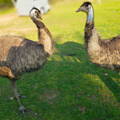
The emu (Dromaius novaehollandiae), Australia’s towering, flightless bird, may seem far removed from the age of dinosaurs. Yet, hidden beneath its shaggy feathers, elongated legs, and vestigial wings lies a profound evolutionary history.
Emus, like all modern birds, are not just related to dinosaurs—they are the living legacy of dinosaurs. Tracing their lineage back over 100 million years, emus are the product of deep evolutionary transitions that connect them directly to theropod dinosaurs, particularly the feathered, ground-dwelling predators of the Mesozoic era.
The Dinosaurian Origins of emus
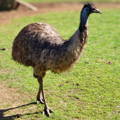
All birds are part of a group known as Avialae, which evolved from small, bipedal theropod dinosaurs during the Jurassic period. This evolutionary path is well-documented through a rich fossil record that includes Archaeopteryx, Anchiornis, and feathered non-avian dinosaurs such as the Velociraptor. These creatures shared many traits now seen in birds: feathers, hollow bones, wishbones, and three-toed feet.
As birds diversified, a subgroup known as Palaeognathae emerged—this includes the emu, cassowary, ostrich, rhea, kiwi, and their extinct relatives like the moa and elephant bird. The term “palaeognath” means “ancient jaw,” referring to their distinct skull and palate structure.
Trending Articles



Emus and the Loss of Flight
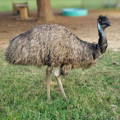
Emus did not inherit their flightless condition from their earliest bird ancestors. In fact, their ancestors were capable fliers. Genomic and anatomical studies reveal that the ratites—flightless birds of the Southern Hemisphere—lost flight independently multiple times in their evolutionary history.
This means the emu’s large body size and ground-dwelling lifestyle evolved separately from similar traits seen in ostriches or rheas, despite the visual similarities. This is an example of convergent evolution, where different species evolve similar traits in response to similar environmental pressures.
The emu’s loss of flight is the result of complex changes in embryonic development. Although emu embryos start with forelimb buds similar to those of flying birds like chickens, their wing development is stunted due to reduced activity in key genes like FGF10, which is responsible for stimulating limb outgrowth.
Further compounding this is the unusual expression of NKX2.5, a gene normally associated with heart development, which appears to interfere with normal limb formation in emus. The result is a tiny vestigial wing, only about 20 cm long, tipped with a single claw, entirely unsuited for flight.
Feathered But Grounded
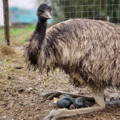
While the emu's wings have diminished, its feathers remain a strong link to its dinosaurian past. Emu feathers are coarse, double-shafted, and lack the aerodynamic structure seen in flighted birds.
These feathers more closely resemble the plumage seen in fossilized non-avian theropods, which likely used feathers for insulation, camouflage, and courtship rather than for flight. In this way, emus provide a living model for what some feathered dinosaurs may have looked and felt like.
Their massive bodies, long necks, and powerful legs are also evolutionary echoes of their ancient relatives. The emu’s hind limbs are highly specialized for running, a trait that mirrors cursorial (running) dinosaurs such as Gallimimus and Struthiomimus.
Like these extinct theropods, emus have large, three-toed feet and elongated lower leg bones that help them reach speeds of up to 30 miles per hour. Their skeletal structure retains the long, backward-facing pubis and other pelvic features characteristic of theropods.
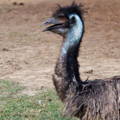
A Modern Dinosaur, Inside and Out
Emus also carry their dinosaurian heritage in less visible ways. Internally, they possess air sacs connected to their lungs, a trait that evolved in theropods to lighten their bodies and improve respiration. Emu egg shell structure, reproductive behavior, and even parental roles reflect deep evolutionary roots. In emus, it is the male who incubates the eggs and raises the emu chicks—an arrangement that has parallels in fossil records of some oviraptorid dinosaurs, where males were found brooding over nests.
The fused tail bones of emus, known as the pygostyle, support their tail feathers and are a hallmark of birds that evolved in the Cretaceous period. Unlike the long, muscular tails of most non-avian dinosaurs, the pygostyle represents a significant shift in tail morphology that occurred as birds adapted for balance during flight and later for ground-dwelling agility in flightless species like the emu.
Evolutionary Trade-Offs and Adaptations
While emus don’t have the ability to fly, this trade-off allowed them to adapt spectacularly to the arid and open environments of Australia. Free from many natural predators for thousands of years, emus evolved to grow larger and more robust, investing energy into speed, endurance, and visual acuity rather than aerial escape.
Their reduced wing size and lack of a keel (the breastbone ridge that supports flight muscles in flying birds) contribute to a lighter, more energy-efficient upper body optimized for terrestrial movement.
Genetic studies reinforce that these adaptations arose after the breakup of the supercontinent Gondwana. As the continents drifted apart, isolated populations of ancestral flying birds evolved independently. In Australia, the ancestors of emus and cassowaries took on a ground-dwelling, flightless form best suited to their specific ecological niches.
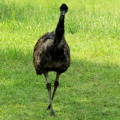
The emu is not merely a large bird incapable of flight—it is a living legacy of the Mesozoic period, a species shaped by tens of millions of years of evolutionary change. From its stubby wings and dinosaurian legs to its feather structure and reproductive strategies, nearly every part of the emu carries with it a thread of ancient history.
What makes the emu particularly fascinating is that its current form is not primitive, but the result of highly specialized adaptations. The emu has not remained unchanged since the time of the dinosaurs; rather, it has followed its own evolutionary path, branching off from flying ancestors and adapting to its environment in remarkable ways. It is both a descendant and a modern marvel, a bird that walks today in the shadow of giants that once ruled the Earth.
To watch an emu stride across the Australian landscape is to witness the living legacy of the dinosaurs—a reminder that extinction is not always the end of the story, and that evolution continues to shape life in surprising and extraordinary ways.
Trending Products
Copyright©2025 All rights reserved. We love to have you share our article as long as you include a direct link to this page. This article or any portion thereof , including all images, may not be reproduced or used in any manner whatsoever without the express written permission of Gypsy Shoals Farm.